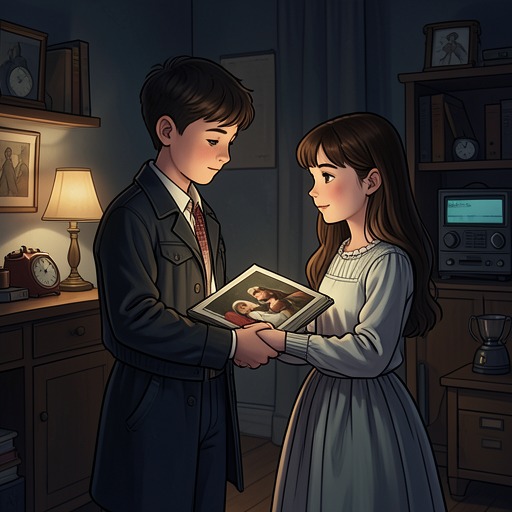
Max McCoy–Jana Crosby relationship
The Journey CollectionMax McCoy–Jana Crosby relationship is a two-year adolescent romance whose meaning emerges less through formal milestones than through Max’s fondness, small acts of attention, and willingness to imagine a future with Jana. The relationship is both modestly defined and emotionally earnest: Max jokes about what dating means, yet speaks of Jana with an affection that leads Travis McCoy to suspect his son is in love.
Definition and Boundaries
Max and Jana have been dating for two years, although the word carries a qualification in Max’s account of the relationship. Travis questions how they can be dating when neither is old enough to go anywhere alone; Max answers that dating is simply a figure of speech. The distinction sets the relationship’s practical limits without dismissing its importance to Max. It is not described through independent outings or adult commitments, but through their companionship and the feelings he expresses.
That playful disagreement also marks a difference in perspective. Travis measures dating against what the teenagers are permitted to do, while Max treats the label as a way to name their closeness even when they cannot go places by themselves. His explanation is lighthearted, but the relationship is not merely a joke to him: later scenes show how readily Jana enters his thoughts and how much he wants her to share what he finds beautiful.
Everyday Signs of Attachment
After school, Max is waiting beside the entrance with Jana when Travis arrives to pick him up. Travis calls for him to hurry, but Max first turns to Jana and says something that makes her laugh. She brushes her long auburn hair over her shoulder and smiles at him. From the driver’s seat, Travis watches the exchange and feels his stomach ache. The brief delay frustrates him because Max had been told to be ready, but the scene also makes Jana’s presence emotionally visible to his father: this is not just a name attached to Max’s explanation of dating, but someone whose smile holds his attention.
Max’s attachment appears again under the night sky. Looking upward, he says that Jana would like the stars. He explains that she loves the night sky and says the stars remind her of diamonds; he thinks she would like the view before them, too. The details matter because Max responds to the scene by imagining Jana’s response to it. Even in her absence, he connects what he sees to what she enjoys and wishes she could see it with him.
When Wanda Stone suggests that, once he is older, Max might bring Jana there, he accepts the possibility with a quiet thought of someday. The exchange gives his affection a future-facing dimension without turning it into a definite plan. For now, Jana is not at the gathering, and the proposed visit belongs to a later time; what the scene establishes is that Max wants to include her in an experience he finds beautiful.
How His Parents Read the Relationship
Max’s parents are not surprised when he speaks about Jana with such devotion. His care for her has been evident for years: at the tender age of ten, he declared that he was going to marry her. The declaration is an early, childlike expression rather than evidence of an adult promise, and both parents consider him too young to know what love is. Their caution keeps the story’s account of the relationship distinct from Max’s own intensity: they recognize his attachment while questioning how fully he can understand it.
Travis nevertheless suspects that Max is in love with Jana. That judgment is shaped by personal comparison. Travis was not much older than Max when he fell in love with Penelope McCoy, so his son’s earnestness recalls his own experience rather than seeming wholly implausible. The parallel does not erase the difference between a ten-year-old’s marriage declaration and an adult relationship; instead, it gives Travis a reason to take Max’s feelings seriously even as the family acknowledges his youth.
Significance in the Story
The relationship is presented through brief, recurring signs rather than a dramatic conflict: two years of dating on Max’s terms, an after-school goodbye delayed by a laugh, and a starry view he immediately imagines sharing with Jana. Together, these moments make affection legible through attention. Max notices what Jana loves and instinctively wants to bring her into the scene; his parents, watching him, recognize a feeling that has become part of his ordinary life.
For Travis, that feeling also opens a tender comparison between father and son. His stomach ache at the school entrance registers his response to seeing Max with Jana, while his later thoughts connect the boy’s devotion to his own early love for Penelope. The relationship therefore contributes to the family story not by resolving into a declared adult future, but by showing Max’s capacity for attachment and the way his parents interpret it: with affection, restraint, and a measure of recognition.